FREE sourcing support and up to 3% coordination support for qualifying briefs. Eligibility applies to qualified business buyers and is confirmed after we review your product, quantity, destination, and sourcing requirements.
Material applications
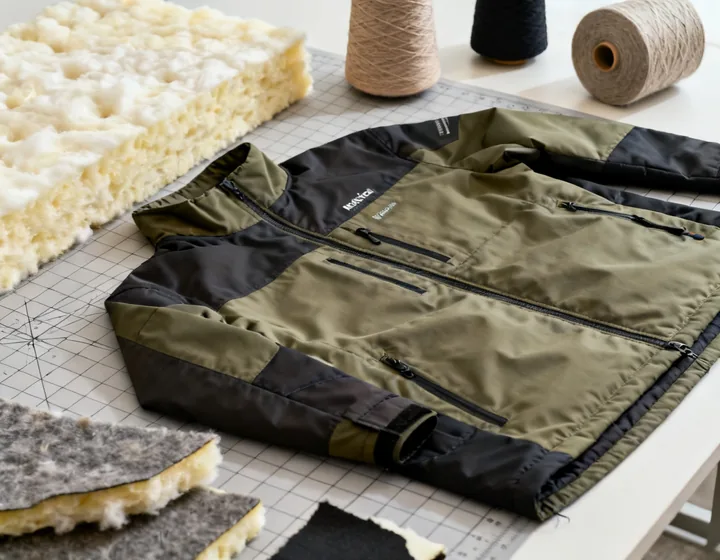
This page supports project translation. It does not introduce a new measured acquisition keyword. Keep the intended use, documents, delivery stages and site constraints visible so a mill can quote the same article the sewing or knitting line will receive.
State whether the fiber or yarn will sit next to skin, in a quilted outdoor shell, in workwear, or in an industrial conversion step. Wash temperature, loft recovery, abrasion at seams and weather exposure change which construction is even eligible. The buyer owns the use description; FiberTrail Procurement does not infer it from a brand search. If outdoor laminated fabric is later required, treat that as a second family rather than stretching a yarn RFQ to cover membranes.
A public ASTM or AATCC listing only names a method. Agree edition, specimen, conditioning and acceptance numbers with the party who will pay for the test. Insulation fill that looks lofty on a table can collapse after laundering; yarn that looks even on a card can shed after winding. Record whether samples are greige, dyed or finished, because those states are not interchangeable evidence. The responsible party for commissioning tests should be written before award.
Quantity needs a unit: kilograms, cones, bales, yards or rolls. Finish includes luster, oil, dye and any later coating. Usable width applies when the project has already moved to fabric; for yarn it is replaced by package form and winding. Delivery stages should list sample, first bulk and repeat lots, plus the US destination so freight and duties sit in the same comparison. Site constraints such as receiving dock limits or shade-lot policy belong in the same brief so they are not discovered after a quote is ranked.
A stock yarn or fill can shorten sampling when count, ply and finish already fit. Custom development can align crimp, oil and later coating, but it needs written minimums, lab-dip or strike-off gates, and a named reviewer. FiberTrail Procurement does not treat either route as universally faster or cheaper; the brief should say which fields may stay on a running article and which must be developed. Generic family brochures help discovery, yet colorfastness, shrinkage and hydrostatic pressure results still have to bind to the quoted article, not to a catalog page.
Share end use, documents, quantity unit and destination so application questions become RFQ lines.
FiberTrail Procurement can provide FREE matching and initial quote support, with up to 3% coordination support where the brief qualifies. Eligibility applies to qualified business buyers and is confirmed after we review your product, quantity, destination, and sourcing requirements.
This is not a promised markdown, a minimum-price ranking, or a same-day offer.